Olive Harvest
Towards the end of November, olives are ready to be harvested. In our garden we have about 20 olive trees of mainly three varieties. While last year the trees in our garden—and the region at large—carried very few olives, this year is different. Already in May we could tell by the enormous amounts of flowers on the trees that this year would be abundant. Of course, there are other factors like rainfall that have their say.
Getting Prepared
To get started, a few preparations and decisions need to be made.
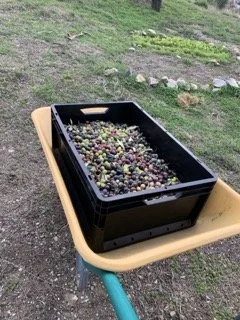
Equipment: Reflecting the moderate number of trees, the conventional way of collecting olives with large nets and some sticks to knock the olives from the trees seemed manageable. There are electric and gasoline-driven shaking devices, but for this harvest we stuck to the good old "palos" (sticks). Also needed are some fruit crates or old coffee bean sacks to collect the olives from the net and transport them with a push cart to the trailer.
Timing and purpose: Due to the abundance of olives this year, we opted to make olive oil. In our village there's a small cooperative that opens during the olive harvest for a few weeks. They run a mill and actually produce the oil in exchange for a percentage of the harvest you bring in. We also decided to collect olives early in the season. Although early olives deliver less oil, the quality is so much better.
Help: Lastly, it's very helpful to ask a neighbor or friend for a helping hand. Especially when it comes to laying out the net and collecting the olives, it makes life so much easier. And it can be fun too.
The Harvest Begins
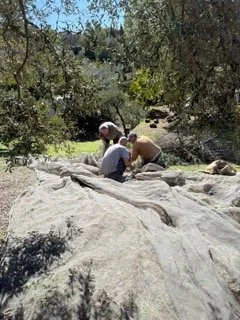
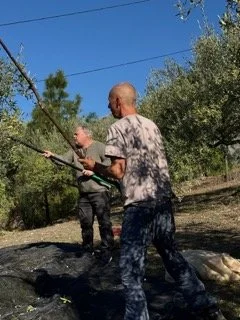
o we got started. The weather was nice—not too warm, yet warm enough to work up a sweat. :) We started with the easy trees. What does that mean? Not too tall, and standing on a more or less level part of the campo. From the beginning it was clear that this was going to be a rich harvest. My estimate was about 700kg, and the first crates filled quickly.
The process slowed down a bit with the taller trees and those standing on steeper slopes, making the installation of the net as well as positioning oneself to shake the olives out of the tree more difficult. To avoid damaging the trees and for our own safety, we left a fair amount of olives on the branches. Not all olives reach the same degree of ripeness at the same time, so the less mature don’t let go of the branches as easily. Handpicking would be another option, however that was out of scope of time available.With the aforementioned powered devices and dedicated harvesting forks, the harvest could have been optimized by an estimated 25-30%. But this might be for another season.
To the Mill
To preserve the best quality of the olives, they need to be at the mill as soon as possible. In our case, it took three days of harvesting over the first weekend, and another two and a half days for the second weekend. The mill only opens on weekends. On the first Sunday we dropped off 333kg of olives, and on the second another 287kg.
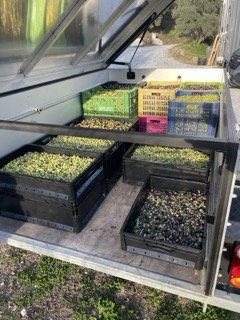
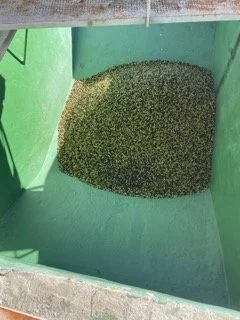
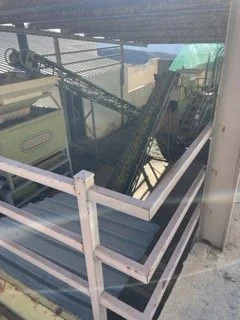
At the mill, the olives are dropped into a silo, from where they fall onto a conveyor belt. The belt leads into a rotating brush to separate remaining leaves from the olives. Then they are weighed and washed. Eventually the olives land in a second silo, where they wait to be milled. The whole process only takes a few minutes. The approximate ratio of olives to oil is about five to one, or twenty percent, although this can vary depending on the season and type of olives.
Liquid Gold

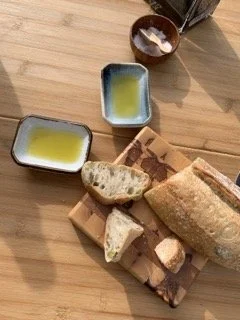
When we dropped off the olives on the second Sunday, the first batch of unfiltered olive oil was already ready for us. A first drop of the fresh oil on the tongue revealed a fantastic flavor and taste with fine grassy and fruity notes. We picked up some fresh bread from our favorite bakery in the village. Back home, the neighbors came over to enjoy the outcome of our mutual work: olive oil with a bit of salt and fresh bread. After days of harvest we felt our tired muscles, yet energized from the satisfaction of physical work. A very special moment filled with contentment and gratitude.
Some of the remaining olives in the trees we picked later. Those will be cured and brined over a few weeks to then serve as a small tapa or tapenade over the course of the upcoming year.
Reflecting back this olive harvest not only provided us with delicious oil for our wider family and friends for a year or more, it also deepened the connection to our neighbors, the people from the cooperative, and not least with the land and trees on it.