This project has several angles to it. One is the widely advocated and practiced use of pallets for all kinds of projects. And this is exactly where my love for woodworking and up-cycling comes into play.
But the trigger for this project came from a requirement for a container that would give my wife's work growing vegetables and herbs a real boost.
The Challenge: Gardening in Andalusia
Living in Andalusia has the great advantage of an extended growing season—except for July and August, because of high temperatures. The other ten months are amazing for gardening if some considerations are taken. These are mostly around irrigation and earth control, as well as protection from wind.
In the first seasons, we planted tomatoes, herbs, beans, and many more directly into the soil. The soil is very dry in Andalusia, where mostly plants prosper who root very deep. Veggies don't fall into this category. Watering is a first attempt; however, if applied widely across the garden by pipes or spraying, most of the water goes many places except to the plants you want to grow. Also, improving the soil in some parts of the garden can be sabotaged by heavy rains that wash it all away. Lastly, the wind dries the soil quickly.
This is where raised beds come into play. There are plentiful inspirations on YouTube, but as most times, individual consideration and adaptation is inevitable.
Our Approach
The approach that proved to work well for us is this:
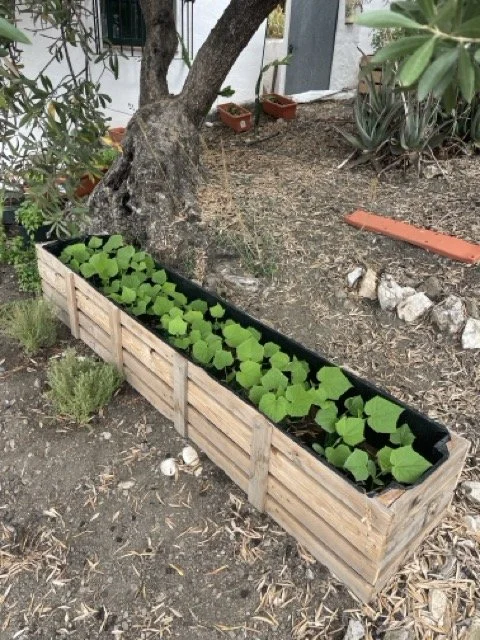
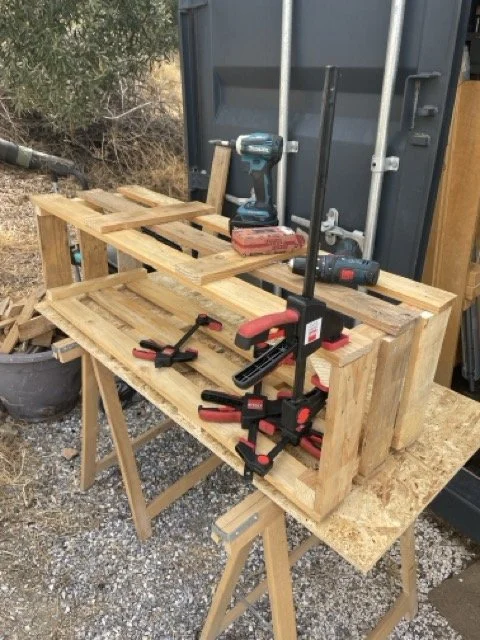
- A number of smaller-sized raised bed containers, between 1.2m and 2m in length, 35cm to 1.2m wide, and about 35cm tall
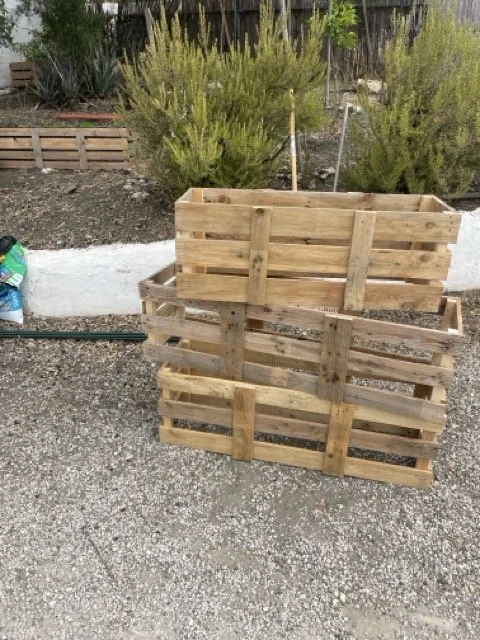
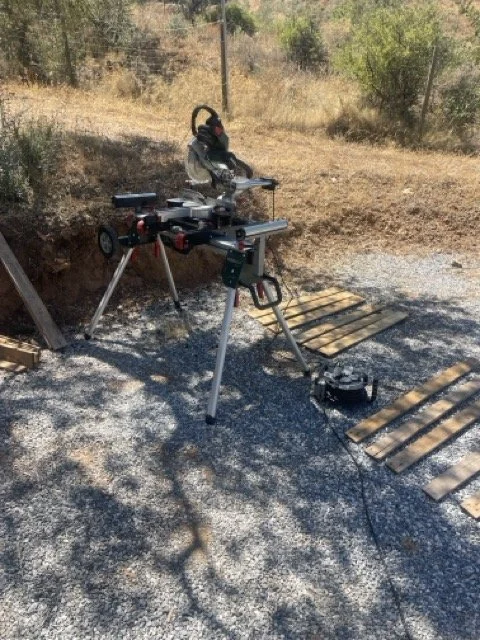
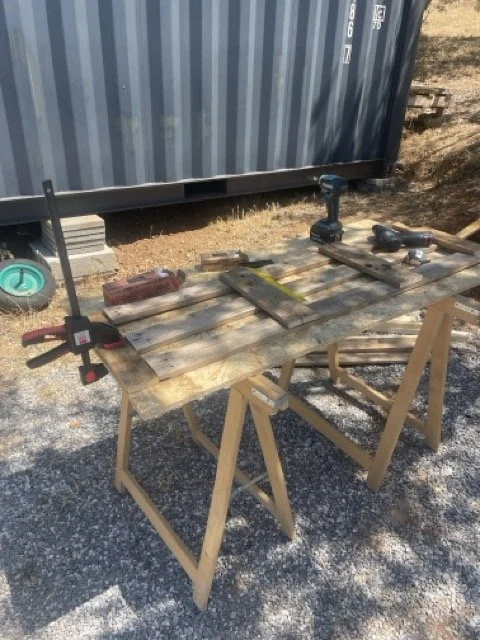
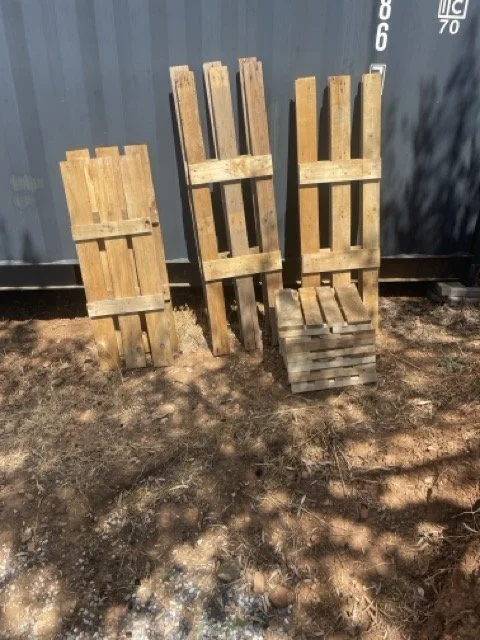
- All made from disassembled pallets
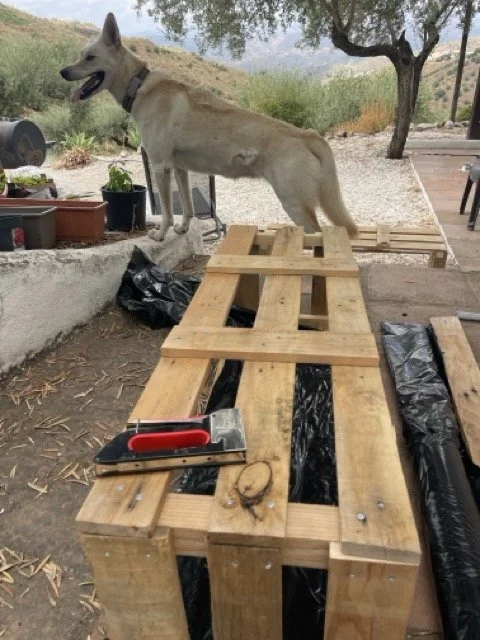
- The inside is lined with a black plastic foil stapled to the bed (this is important to protect from the wind and keep a good amount of moisture, creating a fertile micro-climate)
- The raised beds have no floor. Instead, the floor is carefully built up through a number of layers to control soil and irrigation more effectively:
1. Cardboard (no plastic tapes or colored cartons—egg cartons are great, but you need a lot)
2. A layer of shredded branches (a byproduct of pruning trees in the garden)
3. A layer of half-composted compost
4. A final layer of rich soil
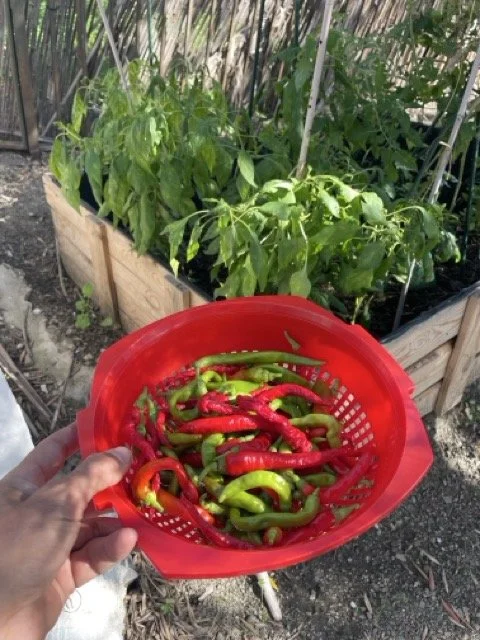
As a first layout, the layers total about 15-20 cm. Over time, more compost and soil is added. Look at the pictures to see how beautifully the plants flourish.
How to Build the Raised Bed
1. Collect pallets. Be aware of the various categories—HT (heat-treated) is normally a safe choice.
2. Disassemble the pallets, ideally by removing all nails.
3. Sort the wood strips by size and plan your raised beds accordingly.
4. Build the frame. The design that worked for us is simple: three to four horizontal strips per side, held together by vertical strips. Once you have all four sides, join them using a 3x3cm or 4x4cm post. This makes for a very solid structure.
5. Line the inside with a layer of black plastic foil.
6. Choose a spot you love and start planting your favorite veggies!